
There’s a specific kind of excitement that comes from watching a transit project move from “someday” to “in progress.” Not the excitement of a ribbon cutting or a first ride, that’s still years off. This is earlier and, in its own way, better. It’s the excitement of watching the paperwork actually get signed.
On July 15, 2026, the Schuylkill River Passenger Rail Authority (SRPRA) and Amtrak signed a Memorandum of Understanding to formalize their partnership on restoring passenger rail between Reading and Philadelphia. If that route sounds unfamiliar, here’s the short version: it would reconnect Reading, Pottstown, and Phoenixville to Philadelphia, to New York, and to the entire Northeast Corridor beyond.
What the MOU Actually Does
MOUs can be vague, symbolic documents. This one isn’t. It accomplishes three specific things.
First, it confirms Amtrak as the intended operator of the future service, a decision SRPRA made partly because Amtrak already has operating resources based in Philadelphia and access to federal funding streams that a smaller operator wouldn’t.
Second, and this is the part I find genuinely encouraging, Amtrak has committed to completing the ridership forecasting, revenue estimating, and cost estimating work required for Step 2 of the Federal Railroad Administration’s Corridor Identification and Development Program. At no cost to SRPRA. Meanwhile, SRPRA has already been chipping away at its own Step 2 tasks using in-house staff and planning commission personnel from Berks, Montgomery, and Chester Counties. Both sides are working ahead of schedule, which is not something you see often in infrastructure planning.
Third, Amtrak has expressed willingness to stay involved through Step 3 environmental work and eventually final design, meaning the same institutional knowledge carries the project from planning through to actual trains running.
Amtrak Vice President of Planning and State Partnerships Nicole Bucich called it an opportunity to reconnect communities like Reading to the Northeast Corridor for economic and community development. SRPRA Chair Marian Moskowitz described it as a major milestone toward bringing intercity passenger rail back to the region.
Why This Matters Beyond the Press Release
I’ve written before about transit as infrastructure for spontaneity, the freedom to decide at 6 PM that you’re going somewhere at 8 PM. A restored Reading to Philadelphia line extends that kind of freedom to communities that currently don’t have it. Right now, getting from Reading to Philadelphia without a car is a genuine challenge. That’s the whole reason this project exists.
The numbers behind it are worth sitting with. Studies project over a billion dollars in new employment income over 30 years, another billion in increased property value, and roughly 1.49 million potential annual riders off the road by 2040. That’s not abstract. That’s the 422 corridor with meaningfully less congestion, and it’s small businesses in Pottstown and Phoenixville gaining access to a much larger customer and labor pool.
There’s an environmental angle too. The Amtrak Airo trains slated for the route produce up to 90 percent fewer particulate emissions in diesel operation compared to older equipment. Better air quality for the whole corridor is a quiet but real benefit of getting more people onto rail.
Watching the Long Game
Passenger rail restoration projects move slowly, and that’s fine. The Reading to Philadelphia line is still working through the FRA’s multi-step corridor development process, and revenue service is years away. But there’s something worth celebrating in a project that’s actually building momentum instead of stalling out. Two organizations agreeing on scope, timeline, and division of labor, with work already underway ahead of the formal next step, is exactly what a project looks like when it’s serious about getting built.
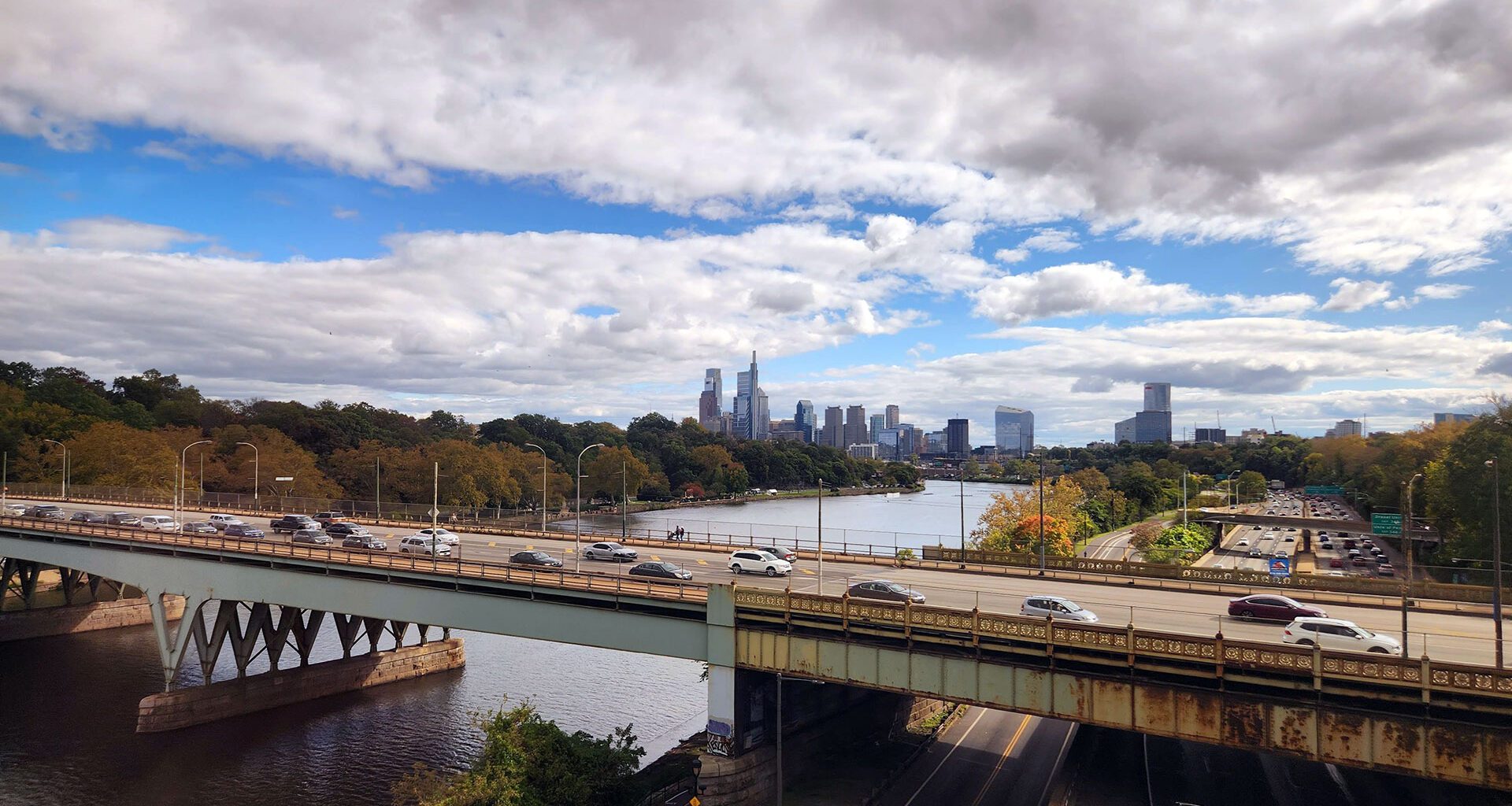
I photographed the featured image for this piece from an Amtrak train pulling out of Philadelphia, heading toward the kind of horizon this new line would eventually open up to Reading, Pottstown, and Phoenixville. It felt like the right image for a story about a route not yet built but clearly on its way.
If you want to follow this project as it develops, SRPRA posts updates directly on their site at gosrpra.com, and it’s worth a bookmark. Projects like this deserve an audience that’s paying attention long before the first train actually runs.