
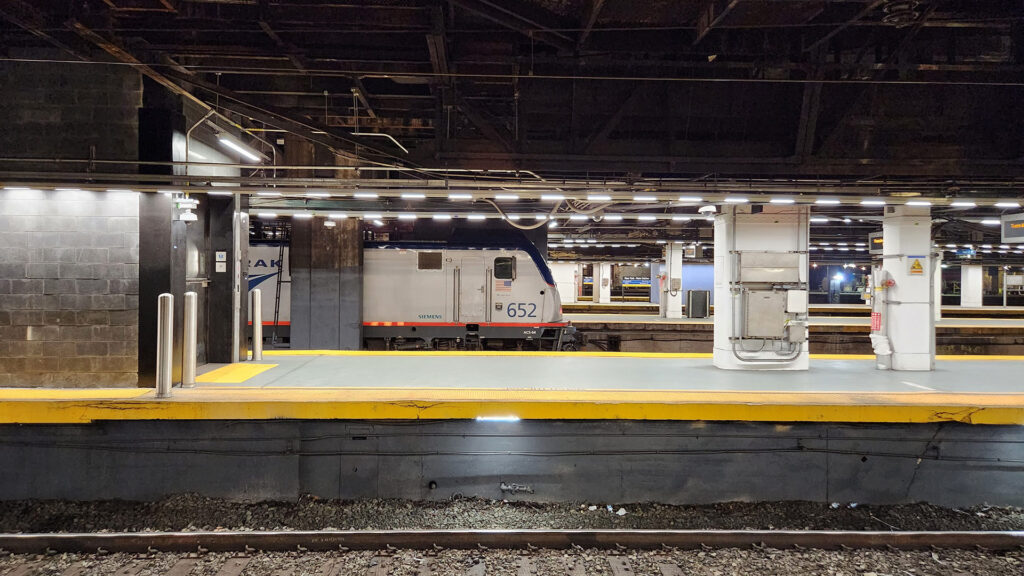
There’s no grand facade greeting you at street level. No sweeping entrance hall where light streams through massive windows. Penn Station, the actual Penn Station beneath Madison Square Garden, is a windowless maze of fluorescent-lit corridors and low ceilings that’s been described as everything from a “catacomb” to a “monumental act of vandalism’s aftermath.”
The most important train station in North America probably isn’t what you’re picturing.
And yet: it’s the busiest passenger rail hub in the Western Hemisphere.
More than 600,000 people passed through this station daily before the pandemic. In 2024 alone, Amtrak handled more than 12 million passenger boardings here—making it the company’s highest-traffic station by a significant margin. Add in Long Island Rail Road and NJ Transit commuters, and you’re looking at a transportation facility operating at nearly three times its designed capacity.
This is what happens when you tear down a Beaux-Arts masterpiece in 1963 and replace it with a sports arena sitting directly on top of your railroad tracks.
How We Got Here (and Where “Here” Is)
The original Pennsylvania Station, completed in 1910, was designed by McKim, Mead & White—the same architectural firm behind some of America’s most iconic buildings. It was glorious. It provided direct rail access to New York City from the south for the first time, with soaring waiting rooms modeled after Roman baths and a train concourse that made arrivals feel monumental.
Then came the automobile age, declining ridership, financial pressure, and a decision that The New York Times later called vandalism. Between 1963 and 1966, the station building was demolished. Madison Square Garden rose above it. The Two Penn Plaza office building followed. The rail operations moved underground to the cramped subterranean facility we know today.
Located beneath the Garden and bounded by 7th and 9th Avenues, 31st and 33rd Streets, today’s Penn Station spans two full city blocks across three underground levels of concourses and 21 shared tracks. It’s open 24/7, though with limited services between 1 AM and 5 AM.
The station is owned and operated by Amtrak, which acquired it in April 1976 following Penn Central’s bankruptcy. But ownership doesn’t mean exclusive use; those 21 tracks serve three separate rail operators with very different needs.
Three Railroads, One Station
Amtrak uses Penn Station as its New York hub for intercity service along the Northeast Corridor and beyond. Before Moynihan Train Hall opened, Amtrak passengers accounted for roughly 5% of daily ridership, a small share but crucial for connections to Boston, Washington, D.C., and cities along the Eastern Seaboard.
Long Island Rail Road (LIRR) brings suburban commuters from across Long Island into Manhattan. With the 2023 opening of Grand Central Madison as part of the East Side Access project, some LIRR trains now terminate there, helping relieve pressure on Penn Station.
NJ Transit connects New Jersey communities to Manhattan, handling the largest share of daily commuters. NJ Transit passengers primarily use the western concourse beneath Madison Square Garden—the old main waiting area from the original station, though few remnants of that grandeur remain.
The tracks are shared strategically: tracks 1-4 are western-facing stub ends primarily used by NJ Transit, while tracks 5-21 provide through-running capability and access to the East River Tunnels (for LIRR service to Queens and Long Island) and the Empire Connection (for Amtrak trains heading north up the Hudson).
It’s a complex ballet of scheduling, with each track used roughly every two minutes during peak periods.
Enter Moynihan: A Second Chance at Grand
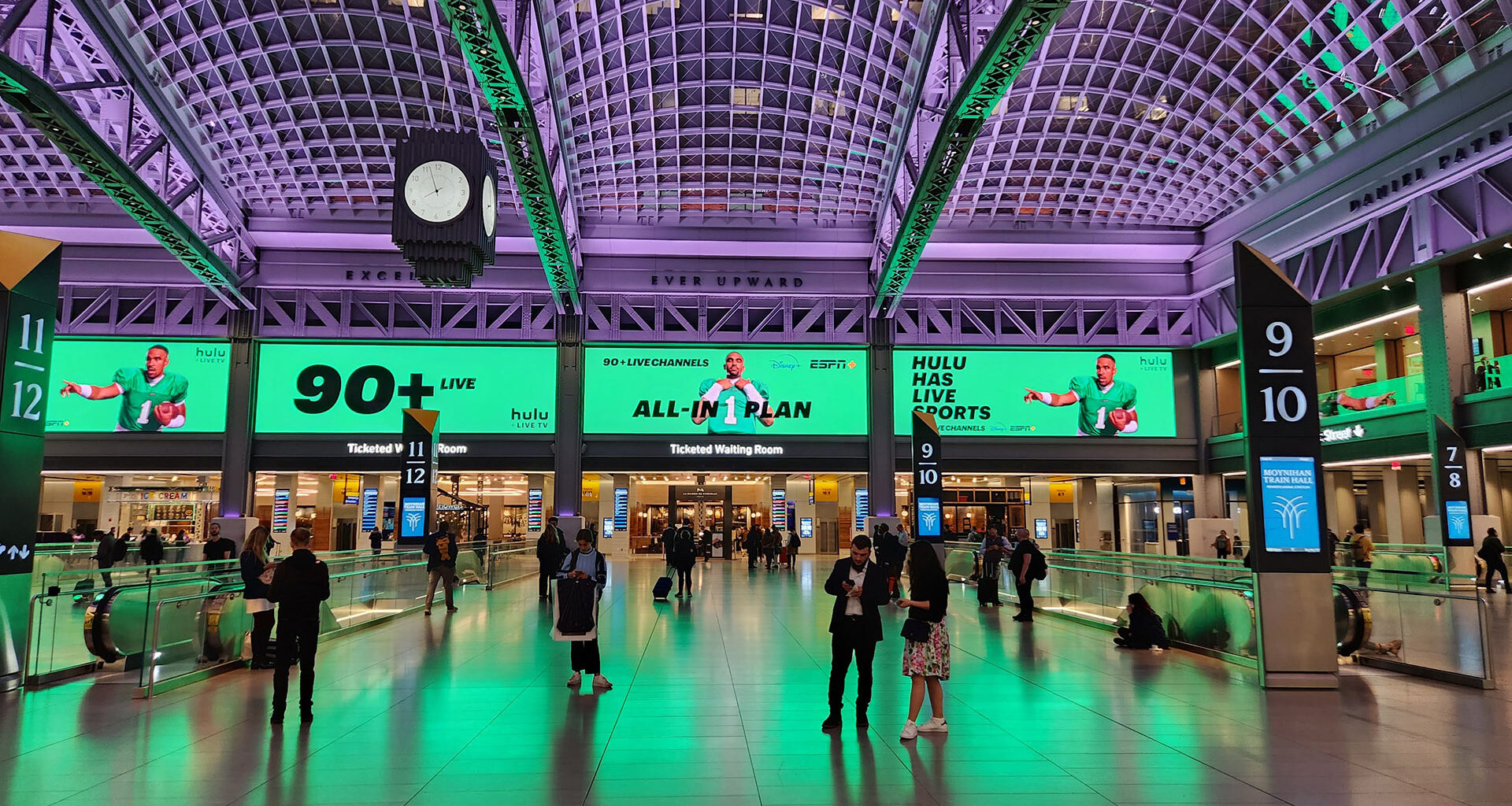
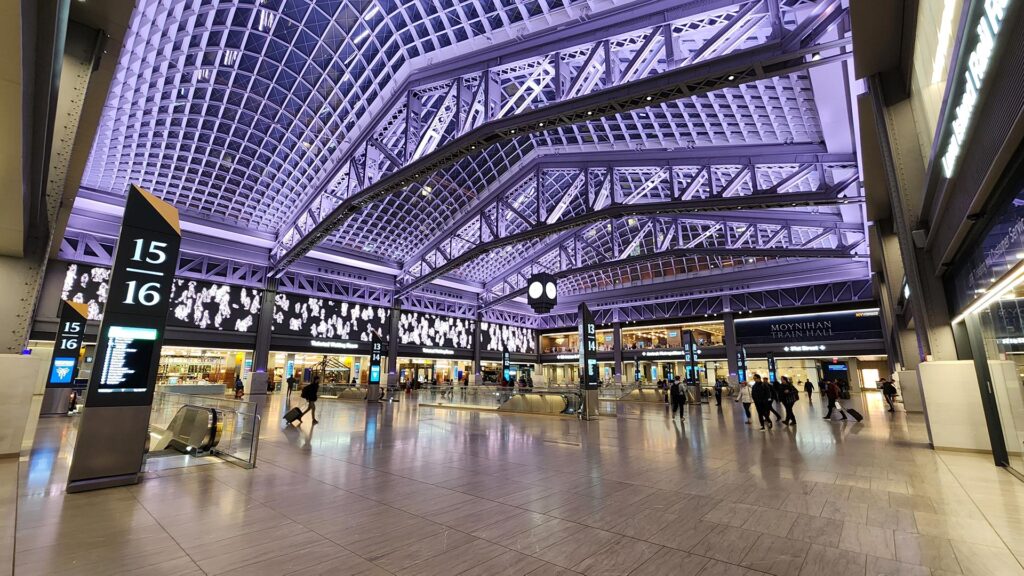
On January 1, 2021, exactly five years ago, Moynihan Train Hall opened across 8th Avenue, occupying the entire historic James A. Farley Post Office building between 31st and 33rd Streets.
Senator Daniel Patrick Moynihan championed this project starting in the early 1990s, recognizing that the Farley Building—also designed by McKim, Mead & White to complement the original Penn Station—offered a rare opportunity. As he famously observed: “Where else but in New York could you tear down a beautiful Beaux Arts building and find another one right across the street?”
The $1.6 billion transformation took decades of planning and political will. What emerged is a 486,000-square-foot complex featuring a 92-foot-high glass skylight above the main concourse, with natural light flooding spaces designed a century ago to move mail rather than people.
Moynihan increased Penn Station’s total concourse space by 50%. It provides access to 17 of the station’s 21 tracks, all of which serve Amtrak and LIRR. The train hall is open daily from 5:00 a.m. to 1:00 a.m.; outside those hours, operations shift back to the original Penn Station across the street.
For Amtrak passengers especially, Moynihan represents a dramatic improvement: dedicated ticketing, baggage claim, a spacious waiting area, and the Metropolitan Lounge for premium passengers. The boarding experience feels less like navigating a basement and more like using a proper world-class rail terminal.
LIRR passengers gained new ticketing and customer service facilities open 6 AM to 10 PM daily, though the LIRR’s main concourse remains in the original Penn Station structure.
Unfortunately, NJ Transit passengers don’t have direct access to board at Moynihan, as tracks 1-4 don’t extend into the new facility. They can exit through Moynihan if arriving on tracks 5 and above, but departures remain tied to the old Penn Station concourse.
Connecting the City (and Beyond)
Penn Station’s power isn’t just about the trains—it’s about what you can reach once you’re here.
The station connects directly to multiple subway lines: the A, C, and E trains via 8th Avenue, and the 1, 2, and 3 trains via 7th Avenue. The PATH system (connecting to New Jersey) has a station at 33rd and 6th Avenue. Local buses serve the area at multiple points around the complex.
Walk east and you’ll find yourself in Midtown Manhattan’s core business district. Walk west through the Penn District and you can access the High Line elevated park, Chelsea’s galleries and restaurants, Hudson Yards’ newer development, and Hell’s Kitchen’s diverse food scene.
For air travelers, there’s a dedicated AirTrain information kiosk in Moynihan helping passengers navigate connections to JFK, Newark Liberty, and LaGuardia airports.
The Future: Metro-North Joins the Party
Construction is currently underway on the Penn Station Access project, which will fundamentally change how the region moves.
For the first time, Metro-North Railroad, which currently serves New York’s northern suburbs exclusively through Grand Central Terminal, will gain access to Penn Station. The project routes some New Haven Line trains via Amtrak’s Hell Gate Line through the Bronx and into Penn Station, creating four brand-new stations in the East Bronx: Co-op City, Morris Park, Parkchester/Van Nest, and Hunts Point.
Initially targeted for completion in 2027, the project has been delayed due to access issues affecting construction on Amtrak’s Hell Gate Line infrastructure. Current estimates suggest completion could slip to 2030, though MTA officials stated in late 2025 that three of the four stations might still open by 2027 if Amtrak expedites track access.
The impact will be significant: residents of the East Bronx, currently without direct rail service, will save up to 50 minutes daily in commute times. Passengers from Westchester and Connecticut will have direct access to Manhattan’s West Side, NJ Transit connections, and everything else Penn Station offers.
It’s another layer of connectivity for a station that already serves as the transit spine of the entire Northeast.
Why This Matters
Penn Station handles more passenger movements than any other rail facility in North America, yet it remains deeply flawed. The underground portions are still cramped, confusing, and far from the welcoming urban gateway a city like New York deserves.
But here’s what’s remarkable: despite operating well beyond its designed capacity, despite the challenges of coordinating three separate railroads, despite being wedged beneath a sports arena—it works.
Over 12 million Amtrak passengers chose trains over planes or cars for their trips. Hundreds of thousands of commuters rely on LIRR and NJ Transit service through this station daily. The numbers keep growing.
Moynihan Train Hall proved we can create beautiful, functional transit spaces even when working within the constraints of historic buildings and complex ownership structures. The Metro-North expansion will further demonstrate that investing in regional rail connectivity pays off in reduced commute times, environmental benefits, and economic development.
Penn Station isn’t perfect. It may never recapture the grandeur of the original. But as the beating heart of intercity and commuter rail in America’s largest metropolitan area, it’s doing something essential: moving people efficiently across a region where that kind of connectivity shapes everything from where people live to how businesses operate.
Sometimes the most important transit infrastructure isn’t the prettiest. It’s just the most necessary.
Getting There: Penn Station is located beneath Madison Square Garden, between 7th & 9th Avenues and 31st & 33rd Streets. The Moynihan Train Hall entrance is at 421 8th Avenue. Multiple subway lines provide direct access, and the station is within walking distance of much of Midtown Manhattan.
For more details on Moynihan Train Hall, visit moynihantrainhall.nyc.