
Seattle has something most American cities don’t: options. Not just one transit system you either use or ignore. Not just buses filling in where rail doesn’t go. Actual, genuine, multiple-mode options for getting around the city and region—each serving different purposes, each opening up different experiences, each genuinely useful in its own context.
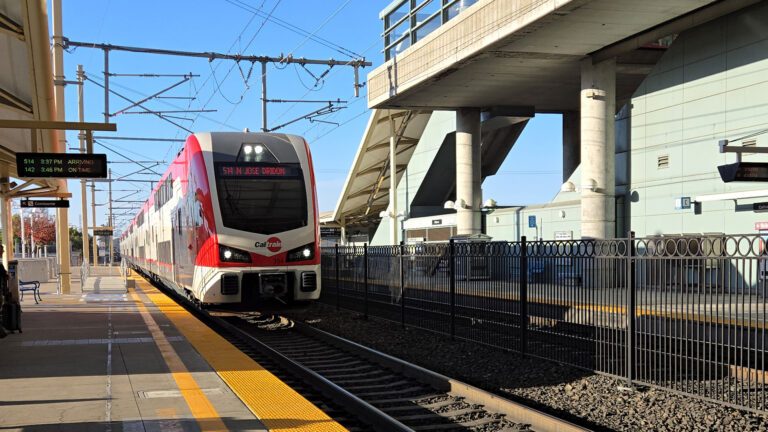
Light rail threading through the city and stretching to the airport. Streetcars connecting neighborhoods. A monorail that’s both tourist attraction and legitimate shortcut. Ferries crossing Puget Sound with mountain views. Commuter trains reaching Tacoma and Everett. And underlying all of it, a comprehensive bus network that fills every gap.
Here’s what makes Seattle’s transit situation remarkable: These aren’t competing systems fighting for relevance. They’re complementary tools that, together, make car-free exploration of the entire metro area genuinely workable.
Let me walk you through what each system actually does, where it goes, and when you’d want to use it.
Understanding the System: Sound Transit + King County Metro
Before we dive into specific modes, you need to understand how Seattle’s transit is organized. Because unlike most American cities with one transit agency, the Seattle region has a layered approach that actually works.
King County Metro operates the local transit system: city buses throughout Seattle, streetcars, and local service across King County. This is your neighborhood-to-neighborhood transportation, your frequent routes along major corridors, your connection to areas light rail doesn’t reach.
Sound Transit is the regional overlay—a separate agency operating transit that connects cities across the metro area. Sound Transit runs:
- Link Light Rail (the 1, 2, and eventually more lines)
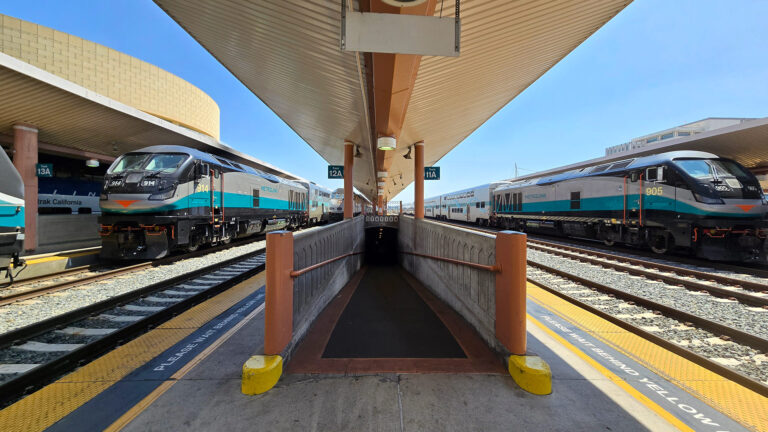
- Sounder commuter trains (north to Everett, south to Tacoma/Lakewood)
- ST Express buses (regional routes connecting Tacoma, Bellevue, Redmond, Everett, and other cities)
Think of it this way: King County Metro gets you around Seattle and local areas. Sound Transit gets you between cities across the region. Both systems use the same ORCA card, integrate their schedules, and coordinate at transit centers throughout the region.
This layered structure means you might take a King County Metro bus to a light rail station, ride Sound Transit Link to another city, then connect to local Metro service there. It’s designed for multi-modal, multi-jurisdictional travel.
Now let’s break down the specific modes.
Link Light Rail: The Regional Backbone
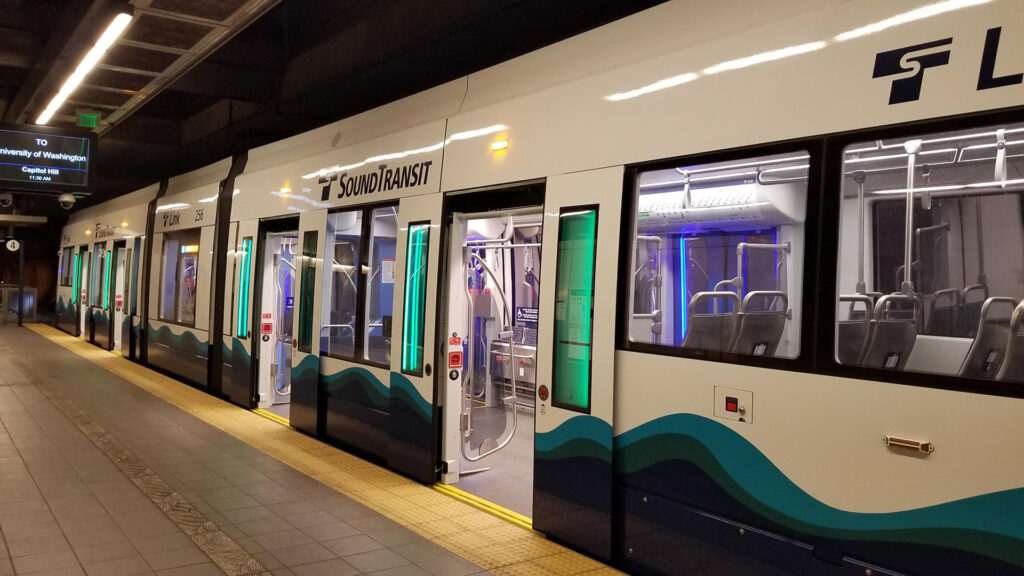
This is Sound Transit’s flagship service, and it’s growing fast. Currently two lines (though they will soon share tracks in downtown Seattle), with extensions opening regularly.
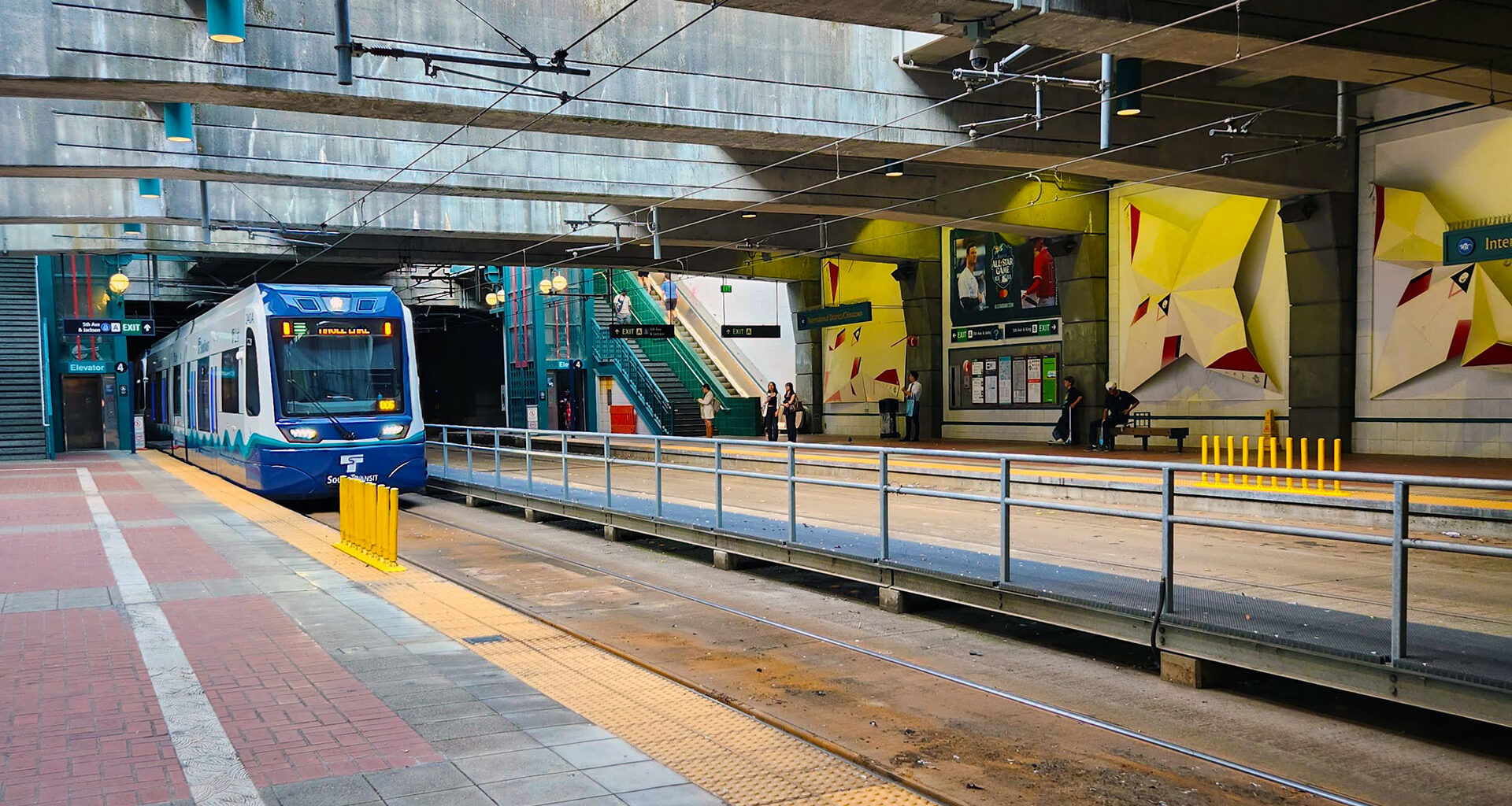
1 Line runs from Lynnwood through Northgate, downtown Seattle, SeaTac Airport, and south to Federal Way—with plans to extend all the way to Tacoma. This is the workhorse—the line you’ll use most often. University of Washington, Capitol Hill, downtown, Pioneer Square, International District, SODO, Seattle-Tacoma International Airport. It connects the destinations most visitors (and locals) actually need.
2 Line operates from South Bellevue to Downtown Redmond, opening up the Eastside via light rail for the first time. This changed the entire equation for exploring the region car-free—Bellevue and Redmond were always transit-accessible via ST Express buses, but now there’s direct rail service. Expected to open in early 2026, the next phase of the 2 Line is currently under construction, extending from South Bellevue through downtown Seattle to Lynnwood via Mercer Island and the I-90 bridge.
The trains themselves? Clean, quiet, mostly grade-separated (meaning they don’t get stuck in traffic). Stations are well-designed, featuring art installations, clear signage, and the Pacific Northwest aesthetic of wood and natural light.
Frequency: Every 8-10 minutes during the day on the 1 Line, slightly less frequent on the 2 Line. Late-night drops to every 15-20 minutes. Weekends are similar to weekday frequency, which is excellent.
Fares: Distance-based, but simple. Most trips within Seattle proper cost $2.50-3.25. Airport to downtown is $3.25. The ORCA card (Seattle’s transit payment card) gives you a small discount and works across all Sound Transit and King County Metro services.
Why it matters: Link is fast, reliable, and stress-free. When you need to cover distance in Seattle—especially getting to the airport or exploring the Eastside—this is your move.
Sounder Commuter Rail: Sound Transit’s Regional Reach
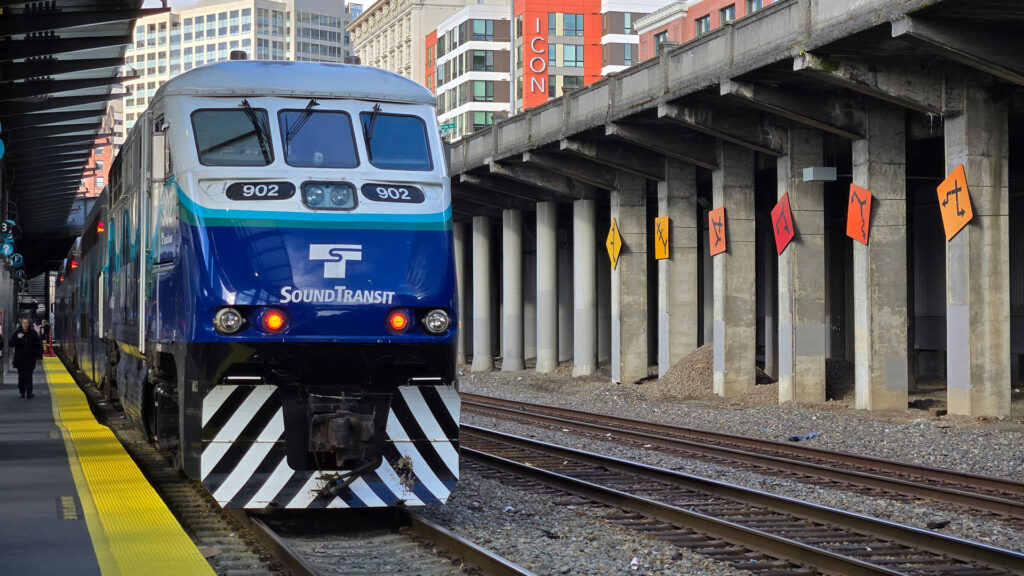
Here’s the transit mode most tourists never consider but should: Sounder trains operated by Sound Transit, running bi-level commuter rail cars north to Everett and south to Tacoma and Lakewood.
These aren’t light rail. These are proper commuter trains—heavy rail running on shared tracks with freight and Amtrak. Comfortable cars with actual seats, tables, bike storage, and that satisfying rumble of real trains on real tracks.
The catch: Sounder primarily serves commuters, so service is heavily peak-oriented. Southbound trains to Tacoma run during morning commute hours. Northbound trains from Tacoma run during evening commute. The reverse (what you’d want for a Seattle-to-Tacoma day trip) has limited options.
But here’s why it matters: When the schedule works for you, Sounder is the best way to reach Tacoma from Seattle.
The Tacoma Day Trip
Let me walk you through this because it’s genuinely worthwhile and nobody talks about it.
S Line runs from Seattle’s King Street Station (right next to the International District Link station) to Tacoma Dome Station and now extends to Lakewood, with stops in Tukwila, Kent, Auburn, Sumner, and Puyallup. ST Express Route 590 is another great option between Seattle and Tacoma, with service throughout the day in both directions, approximately every 30 minutes.
Check the S Line schedule carefully—weekend service is limited, and weekday options might not align with typical tourist timing. But when it works, it opens up Tacoma completely.
Arrive at Tacoma Dome Station. Transfer to Tacoma Link (the T Line)—a free light rail that runs from Tacoma Dome through downtown to the Hilltop District and St. Joseph. Fares are $2.00, but transfers are included between the S Line/ST Express and the T Line.
The T Line connects you to everything worth seeing in Tacoma:
Museum of Glass: Right on the waterfront with the iconic cone structure. Watch glassblowers work. See Dale Chihuly pieces. Walk the Bridge of Glass connecting to downtown. This alone justifies the trip.
Tacoma Art Museum: Pacific Northwest art, strong Native American collection, rotating exhibitions. Accessible via T Line.
Theater District: Historic Pantages Theater, other venues, walkable streets with restaurants and breweries.
Wright Park: Beautiful park with the Seymour Botanical Conservatory if you have time to wander.
Waterfront: Ruston Way has a miles-long waterfront path, restaurants, and views across Commencement Bay to the Olympics. It’s farther from the T Line but accessible by local bus or a pleasant walk.
The whole setup—Sounder to Tacoma Dome, T Line around downtown, walking between museums and waterfront—makes car-free exploration of Tacoma entirely practical. No parking stress, no I-5 traffic, just trains and light rail, and discovering Washington’s third-largest city.
Cost comparison: Sounder from Seattle to Tacoma costs about $5.25- $6.25, depending on the exact stations. Tacoma T Line is included with a fare transfer. Total: roughly $12 round-trip. Driving means 30-40 miles each way, I-5 traffic, and downtown parking fees. The train is cheaper, less stressful, and more interesting.
Pro tip: Bring your bike. Sounder has excellent bike storage, and Tacoma is very bikeable. You can explore the Ruston Way waterfront or other areas beyond the T Line’s reach much more easily with two wheels.
N Line to Everett
The North Line runs from Seattle to Everett with stops in Edmonds and Mukilteo. Similar commuter-focused schedule limits many day-trip options, but it exists as an option for reaching the northern suburbs and Everett’s waterfront.
Honestly, ST Express buses to Everett or Link’s northern extensions are usually better tourist choices. But if you’re specifically exploring Everett, Boeing factory tours, or coastal Snohomish County, Sounder North is there.
Why Sounder Matters
Sounder represents what commuter rail can be: Comfortable, reliable regional transportation that happens to also serve recreational travel when the schedules align.
Most American commuter rail systems are afterthoughts—diesel trains on freight tracks, minimal service, clearly designed only for 9-to-5 commuters. Sounder has the same constraints but manages to feel like legitimate transportation rather than a compromise.
And when you’re planning a Tacoma day trip, it’s genuinely the best option. Better than driving. More interesting than express buses. The train journey itself—through industrial areas, past wetlands, alongside Puget Sound in stretches—shows you the region’s geography in ways highways never do.
ST Express Buses: Regional Connections
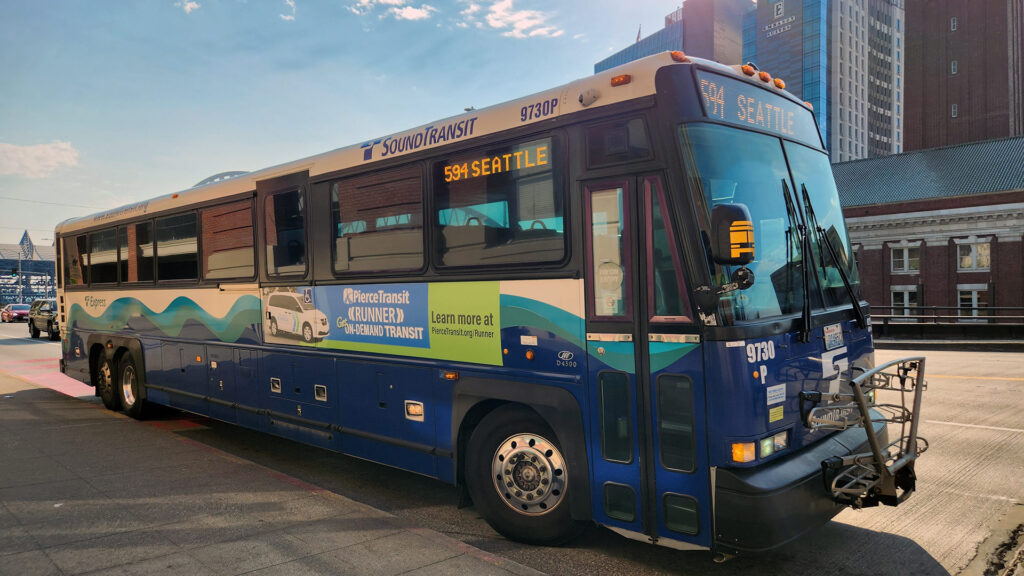
While Link Light Rail and Sounder get the attention, Sound Transit’s ST Express bus network quietly does critical work connecting cities across the region.
These aren’t local city buses making frequent stops. They’re express routes designed for longer regional trips—limited stops, freeway travel, connecting major destinations.
Key routes worth knowing:
Route 522: Seattle to Woodinville via Lake City and Bothell Route 535: Lynnwood to Bellevue via Redmond Route 545: Seattle to Redmond via Montlake and Overlake Route 550: Seattle to Bellevue via I-90 Route 574: Federal Way to Tacoma Route 578: Puyallup to Lakewood Route 580/590/594/595: Various Seattle-Tacoma express routes.
Currently, Route 550 is your option between Seattle and Bellevue, but that will change when the 2 Line extends into Seattle. While light rail handles much of the heavy traffic, ST Express buses fill crucial gaps—reaching communities Link doesn’t serve, providing redundancy during maintenance, and offering different routing options.
The integration matters: You can take Link Light Rail to a transit center, connect to an ST Express bus heading to a suburban destination, then transfer to local King County Metro service. All on the same ORCA card, all coordinated schedules.
Washington State Ferries: The Scenic Commute
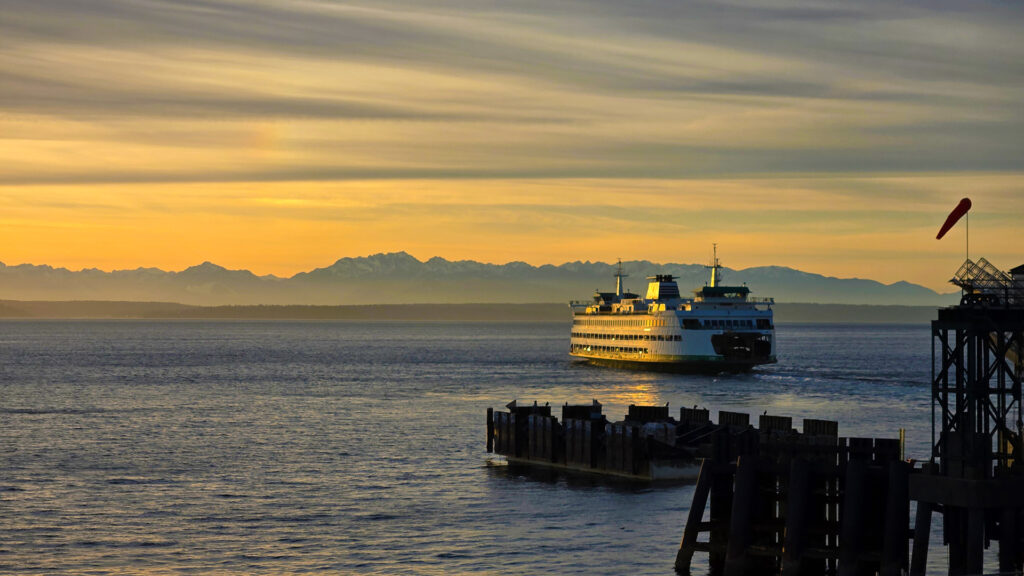
This is the piece that makes Seattle transit genuinely unique. You’re not just moving through a city. You’re crossing Puget Sound with views of the Olympics, the Cascades, Elliott Bay, and islands scattered across the water.
The Washington State Ferry system isn’t tourist infrastructure pretending to be transit. It’s actual daily transportation for thousands of people commuting from Bainbridge Island, Vashon Island, and other locations to downtown Seattle. You’re just along for the ride.
Seattle routes worth knowing:
Seattle-Bainbridge Island: 35 minutes from downtown Seattle’s Colman Dock to Bainbridge. Frequent service (every 50-60 minutes). Walk on or drive on. Most visitors walk on—it’s cheaper ($9.45 for adults), easier, and you can explore Bainbridge on foot or rent bikes on the island.
Seattle-Bremerton: About an hour crossing. Less frequent than Bainbridge (every 1-2 hours). Longer trip means more time on the water, more dramatic views, more sense of actually traveling somewhere rather than just commuting.
Fauntleroy-Vashon-Southworth: Requires getting to Fauntleroy in West Seattle (King County Metro bus or rideshare), but Vashon Island has a different vibe—more rural, more artsy, more “we’re really getting away from the city.”
The ferry experience itself: Walk on at Colman Dock (right at the downtown waterfront, accessible from multiple bus lines and a short walk from Pioneer Square Station on Link). Board the ferry—it’s essentially a massive floating bus with multiple decks. Climb to the upper outdoor deck if the weather permits. Watch the city recede. Watch islands approach. Breathe.
The crossing isn’t just transportation. It’s the experience. Seabirds follow the wake. Ferry horns echo across the water. The smell of salt air. Mountains in every direction. You arrive at your destination already having had a memorable part of your day.
Pro tip: Fares are only charged when leaving Seattle, not returning. So your round-trip cost is just the one-way walk-on fare from Seattle. Budget-friendly spontaneity.
Seattle Streetcar: King County Metro’s Neighborhood Connectors
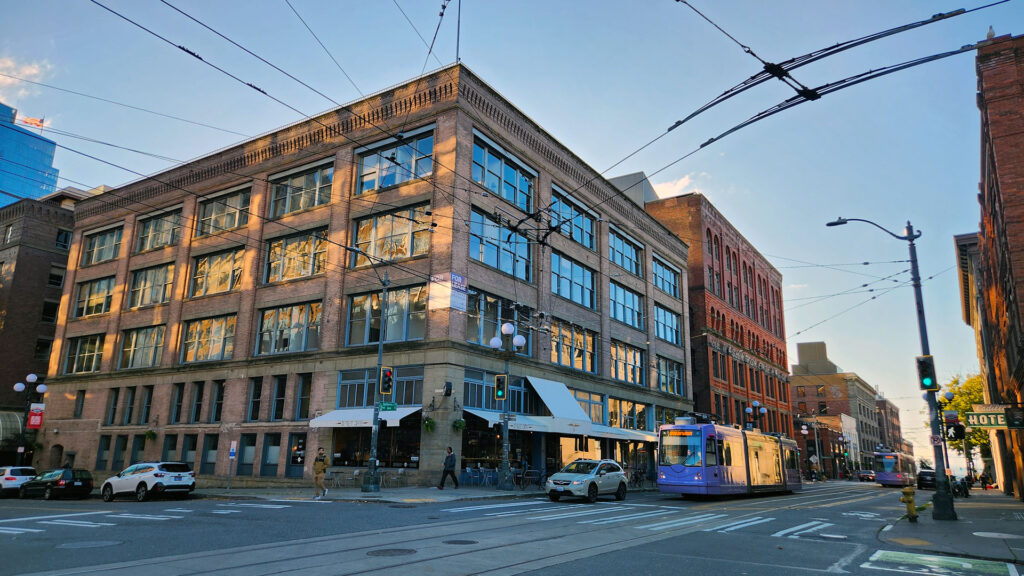
Back to King County Metro’s local service: Two streetcar lines that don’t connect to each other (yet—there are plans). These aren’t tourist attractions. They’re neighborhood circulators that happen to be useful if you’re going where they go.
South Lake Union Line: Runs from Westlake (downtown) through South Lake Union to Fairview. Connects downtown to the Lake Union neighborhood, which has transformed into a dense mix of tech offices (hello, Amazon), restaurants, and the Museum of History & Industry (MOHAI).
First Hill Line: Runs from Pioneer Square through the International District to First Hill and Capitol Hill. Connects some of Seattle’s most interesting neighborhoods, including the healthcare district on First Hill.
Frequency: Every 10-15 minutes during the day. Free if you’ve already paid a Link or bus fare within the last two hours (transfer credit).
When to use them: If you’re already in the area and going in the right direction, hop on. They’re pleasant, slower than Link but faster than walking, and give you a different street-level view of neighborhoods. Don’t plan your whole trip around them, but use them opportunistically.
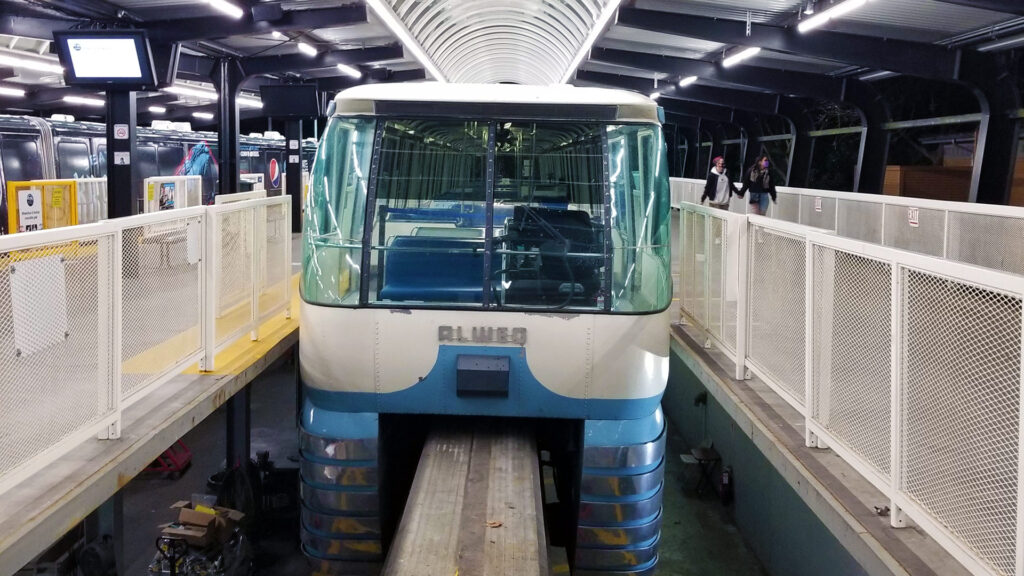
Seattle Monorail: The Time Capsule
Built for the 1962 World’s Fair, the Seattle Monorail is still running the same route today: Westlake Center (downtown) to Seattle Center. One mile. Two minutes. Every ten minutes.
This is Seattle’s weirdest transit asset. Too short to be truly useful. Too iconic to eliminate. Too frequent to ignore when you’re actually going between downtown and Seattle Center.
When to use it: You’re at Westlake and want to visit the Space Needle, Chihuly Garden and Glass, Pacific Science Center, or catch a show at one of Seattle Center’s venues. The monorail drops you right there. It’s faster than walking (which takes 15-20 minutes), more fun than the bus, and genuinely convenient for that specific trip.
It’s also an experience unto itself—retrofuturistic 1960s design, elevated track through the city, that distinctive monorail sound. Ride it once because it’s fun. Use it afterwards when it’s actually practical.
Cost: $4 each way. Fares for the monorail are paid at turnstiles at either terminal using an ORCA card, a smartphone app, or paper tickets bought from a vending machine with credit/debit cards, or mobile payments. But it’s quick, frequent, and if you’re going to Seattle Center anyway, why not?
Putting It All Together: Multi-Modal Exploration
Here’s where Seattle’s transit diversity becomes an actual advantage. Different modes serve different purposes, and combining them intelligently opens up the entire region.
Airport to downtown: Sound Transit Link Light Rail from SeaTac to Westlake Station. 38 minutes, $3.25, runs every 8-10 minutes. This is so much better than fighting I-5 traffic or paying for parking that it’s almost absurd.
Exploring downtown and Capitol Hill: Link Light Rail for longer distances. King County Metro streetcar if you’re going to First Hill. Walking for everything else—downtown Seattle is genuinely walkable.
Getting to Seattle Center: Monorail from Westlake if you’re downtown. Link to Westlake, then the monorail. King County Metro bus Route 62 if you’re coming from other directions. Walking from Belltown (15 minutes).
Island day trip: Walk or take the Link to Colman Dock. Ferry to Bainbridge (35 minutes). Explore Winslow downtown on foot (walkable from ferry terminal). Lunch. Maybe rent bikes for wider exploration? Evening ferry back. Dinner in Seattle. Total cost: Less than $20. Total experience: Priceless.
Tacoma day trip: Sound Transit Sounder (from King Street Station) or ST Express Route 590 (from 2nd Ave Ext S & Yesler Way) to Tacoma Dome (check schedule). Tacoma Link T Line to the Museum of Glass, the waterfront, and downtown. Explore museums, walk the Bridge of Glass, and wander downtown. Sounder/ST Express back to Seattle. Total cost: About $12 plus museum admission. Traffic avoided: All of I-5 between Seattle and Tacoma.
Eastside exploration: Soon, Sound Transit Link 2 Line to Bellevue or Redmond. This will be a brand new capability! Currently, you need to use the ST Express buses or take a complex routing. Within a few months, it will be direct rail service with scenic views while traveling across Lake Washington.
Regional trips: King County Metro buses go everywhere, Link doesn’t go within the city. RapidRide lines (A, C, D, E, F, H) are frequent and reliable. Sound Transit Express buses connect to Tacoma, Everett, and suburbs beyond the rail network.
What Makes Seattle’s Transit Work
Three things distinguish Seattle’s transit from most American cities:
1. Political commitment. The region keeps investing in transit. Sound Transit extensions keep opening. King County Metro maintains frequent bus service. Sounder proves the region takes commuter rail seriously. The layered approach—regional Sound Transit overlaying local King County Metro—actually functions instead of creating turf wars.
2. Geographic necessity. Seattle’s water barriers—Lake Washington, Lake Union, Puget Sound, Ship Canal—mean you can’t just build highways everywhere. Transit and ferries become essential. Geography forced good decisions.
3. Cultural acceptance. Riding transit in Seattle doesn’t mark you as unable to afford a car. Tech workers take Link. Professionals commute by ferry or Sounder. Families use buses. It’s normalized in ways many American cities haven’t achieved.
This creates a virtuous cycle: Good service attracts riders, which justifies better service, which attracts more riders.
The Practical Reality
Let me be honest about the limitations:
Coverage gaps exist. Some neighborhoods still require buses or aren’t well-served at all. North Seattle has better coverage than south. The Eastside is improving but still developing.
Late night service is limited. Link runs until about 1:00 AM, but frequency drops significantly after 10:00 PM. Ferries have their last sailings around midnight on most routes. Sounder doesn’t run late at all—it’s commuter-focused. Plan accordingly or budget for rideshare.
Sounder schedule constraints. The commuter-oriented schedule means day trips require careful planning. You can’t spontaneously decide at 2:00 PM to take Sounder to Tacoma without planning your return.
Weather matters. Seattle’s reputation for rain is earned. Ferry crossings can be rough in winter storms. Walking between transit stops means getting wet. Bring layers and waterproof gear.
The streetcar lines need work. They’re useful, but limited. The two lines should connect (plans exist but funding is uncertain). Right now they’re more neighborhood amenities than regional transit.
But here’s what you gain: A city and region that’s genuinely explorable without a car. Where you can fly in, take Link downtown, use combinations of Sound Transit and King County Metro services—rail/streetcar/ferry/commuter train/bus—to reach destinations throughout the metro area, and never face the stress of Seattle traffic or parking costs.
Your Turn
Next time you’re in Seattle—or if you live here and default to driving—try this:
Pick a destination you’d normally drive to. Check if Sound Transit Link serves it. If not, see what combination of modes gets you there: Link + King County Metro streetcar? Metro bus + ferry? Sounder + Tacoma Link? ST Express + local Metro? Monorail + walking?
Then actually do it.
Maybe it’s a ferry ride to Bainbridge on Saturday morning, wandering Winslow, ferry back in the afternoon.
Maybe it’s Sounder to Tacoma to see the Museum of Glass, riding the free T Line, walking the waterfront.
Maybe it’s Link to Capitol Hill for dinner, walking through the neighborhood, Link back.
Maybe it’s using the monorail to reach Seattle Center just because you’ve never actually ridden it.
Maybe it’s taking Link to the airport for your next flight instead of paying for parking or riding with someone.
Notice what changes when you’re not managing a car. How you can chill on Link or Sounder instead of navigating traffic. How ferry crossings become the experience, not just the transportation. How spontaneity becomes possible when you’re not locked into parking logistics.
See what you discover when you use the region’s actual transit infrastructure—both Sound Transit’s regional network and King County Metro’s local services—instead of defaulting to the car every time.
That’s the opportunity Seattle offers: Not just one transit mode, but a whole toolkit of options operated by complementary agencies, each serving different purposes, all working together to make car-free exploration genuinely practical across the entire region.
Around the corner and around the globe—or in this case, from the Sound to the lakes, from downtown to the islands, from the Space Needle to Tacoma’s waterfront, from the airport to Everett.
Every mode. Every agency. Every direction. All of it accessible.