Ask someone about Bay Area transit and they’ll talk about BART. The trains under the bay. The yellow and blue lines on maps. The system that defines San Francisco transit in the popular imagination.
But there’s another train system that’s just as essential to understanding the Bay Area, one that most visitors overlook entirely: Caltrain.
51 miles of track connecting San Francisco to San Jose Tamien through the Peninsula. Twenty-eight stations serving everything from downtown SF to Silicon Valley tech campuses to San Jose’s urban core. Recently electrified, whisper-quiet, and running every 15-20 minutes during peak hours and every 30 minutes during non-peak hours. Additionally, there are four trains in each direction, during rush hour only, between San Jose and Gilroy.
Here’s what makes Caltrain different: it runs a single spine down the Peninsula. It’s not trying to be everything. It’s laser-focused on one mission—connecting the Bay Area’s two major cities and everything between them.
And it turns out, there’s a lot between them.
What Caltrain Actually Is
Think of Caltrain as the Bay Area’s main street running north-south. San Francisco at the top and San Jose at the bottom. 51 miles of Peninsula cities, suburbs, tech campuses, and surprising downtowns in between.
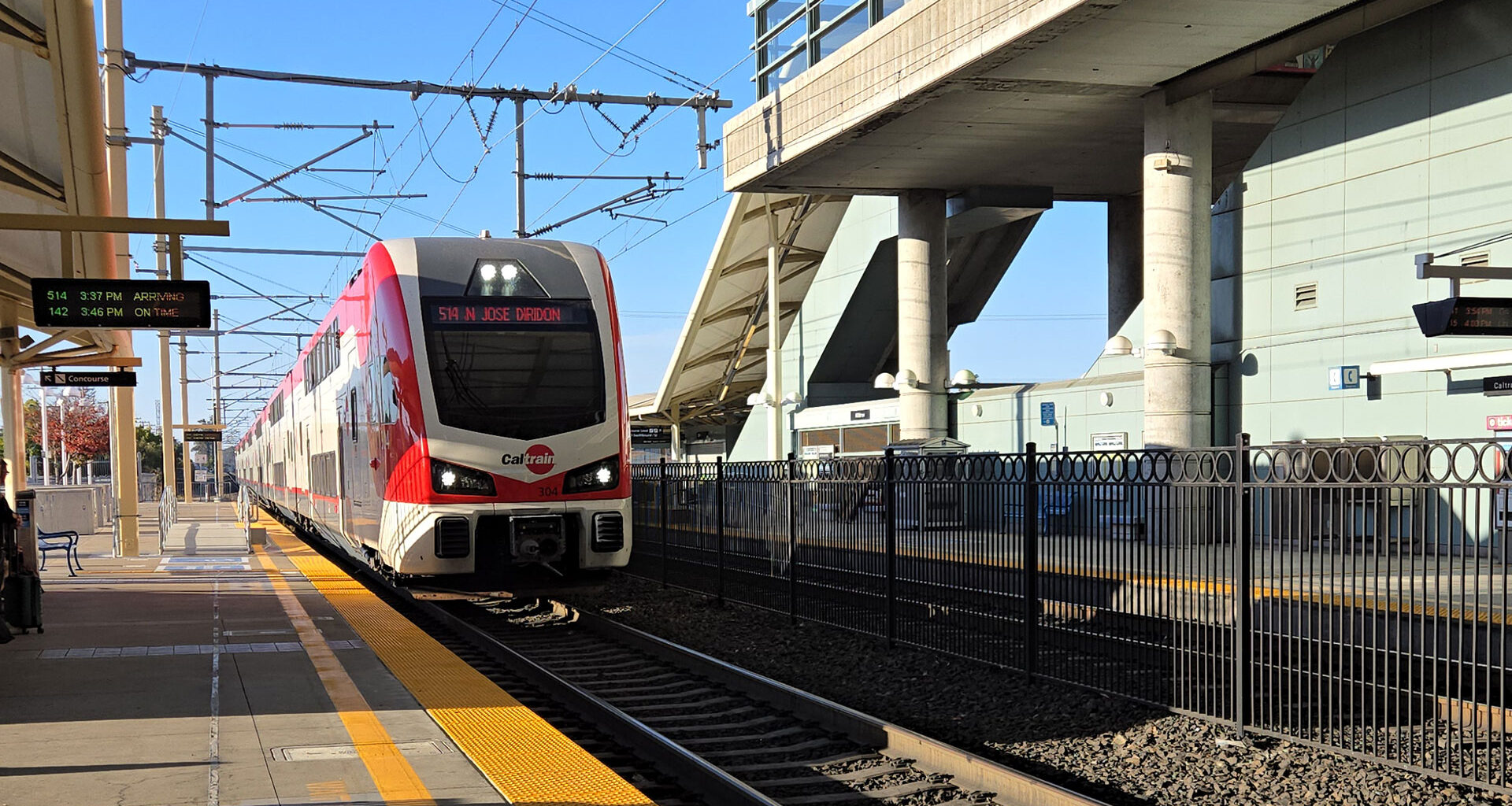
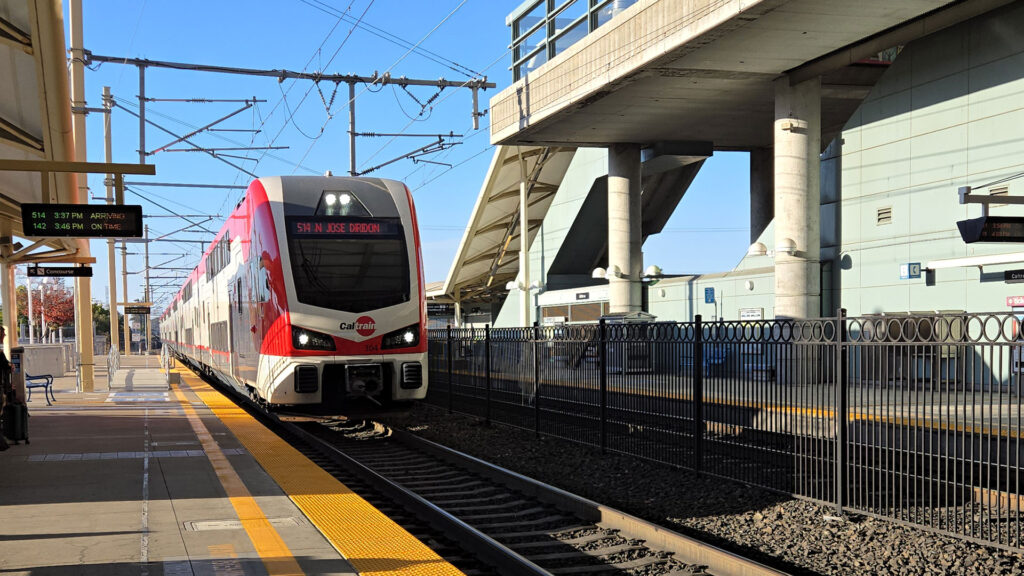
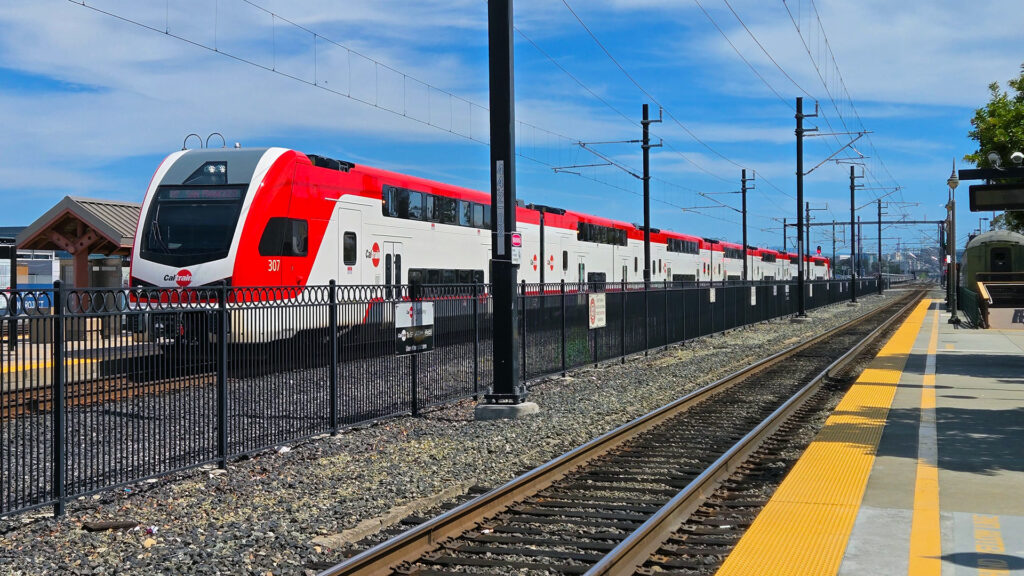
The trains are sleek electric multiple units that replaced the old diesel locomotives in 2024. Smooth, quiet, fast. During rush hour, you’ll see “Limited” trains that skip smaller stations, getting you from SF to San Jose in about an hour. Off-peak, “Local” trains stop everywhere, taking closer to 90 minutes end-to-end.
But here’s the key insight: You’re not usually riding end-to-end. You’re using Caltrain to connect specific destinations along the Peninsula. Palo Alto to San Francisco. Mountain View to San Jose. Redwood City to Millbrae for an SFO flight.
That’s when Caltrain’s real utility becomes clear—it’s not just a commuter rail line. It’s a mobility spine that makes car-free exploration of the entire Peninsula genuinely practical.
The Practical Basics
Fares: Zone-based system, ranging from about $3.75 for short trips to $13+ for the full SF-to-SJ run. Day passes provide unlimited rides. Clipper Card (the Bay Area’s unified transit card) works across Caltrain, BART, Muni, VTA, and most other regional systems.
Tickets: Use the Caltrain app, buy from station machines, or tap your Clipper Card. The app is straightforward—select your origin and destination, buy your ticket, show the conductor when they come through the car.
Bikes: This is where Caltrain shines. Dedicated bike cars on every train. First-come, first-served. No reservations, no extra fee. Just roll your bike on and secure it in the racks. The Bay Area is serious about bikes, and Caltrain reflects that commitment.
Frequency: Every 15-20 minutes during weekday peak hours. Every 30 minutes midday. Every hour, evenings and weekends. That weekend half-hourly service is still better than most American commuter rail—you’re never waiting more than 30 minutes for the next train.
Connections: This is crucial. At Millbrae, Caltrain meets BART for connections to SFO and the East Bay. At San Jose Diridon, it connects to VTA light rail, Amtrak, and ACE. Most stations have local bus connections. The system is designed for multi-modal travel.
Destinations Worth Your Time
San Francisco: 4th & King Station
The northern terminus sits in the developing Mission Bay/SoMa area, not downtown. But that’s fine—Muni Metro’s T-line connects you to downtown in 10 minutes. Or walk: 4th & King to the Embarcadero is about 20 minutes, passing through neighborhoods that show you San Francisco’s evolution from industrial waterfront to tech hub.
The station itself is pleasant—open-air platforms, and a 5-minute walk to Oracle Park, home of the Giants. Good vibes for starting or ending a Peninsula journey.
Millbrae: The Airport Gateway
Two reasons to know Millbrae: It’s where Caltrain meets BART, and it’s your key to SFO. We’ll talk airport access in detail shortly, but even if you’re not flying, Millbrae demonstrates how integrated Bay Area transit can be when systems actually coordinate.
San Mateo: Underrated Downtown
Get off at San Mateo and walk to downtown—about 10 minutes east of the station. You’ll find a main street that actually functions as a main street: Restaurants, shops, a movie theatre, and a farmers market on Saturdays. The kind of Peninsula downtown that existed before tech money transformed everything else.
Redwood City: The Comeback Story
Redwood City spent decades as a Peninsula afterthought. Then downtown revival happened. Now it has a legitimate dining scene, a restored Art Deco theatre, and a courthouse square that’s genuinely pleasant. The downtown is walkable from the station, and there’s enough going on to justify making this a destination, not just a stop you pass through.
Palo Alto: University Avenue
This is the Peninsula’s iconic downtown. University Avenue runs from the Caltrain station straight to Stanford’s gates. Tree-lined, walkable, packed with restaurants and shops. Yes, it’s expensive. Yes, it’s changed. But it’s still worth experiencing, especially on a Saturday morning when The Downtown Palo Alto Farmers Market takes over the closed street.
Plus: Stanford campus is accessible by free campus shuttles from downtown, or it’s a pleasant bike ride if you bring your bike on Caltrain.
Mountain View: Castro Street
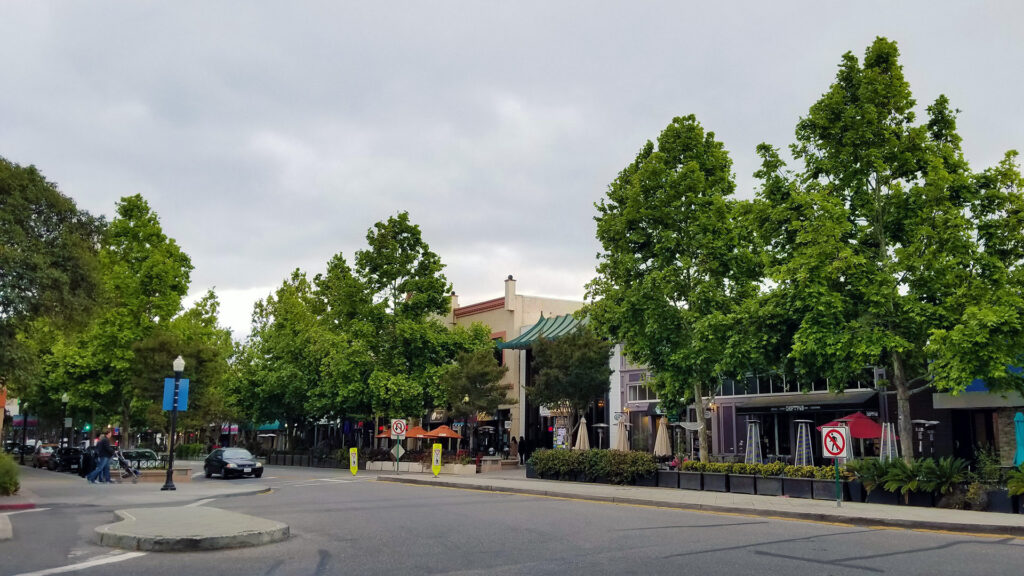
Tech money transformed Mountain View, but Castro Street maintains its downtown bones. Walkable from the station, lined with restaurants representing the area’s incredible diversity, anchored by a beautiful art deco movie theatre. The Computer History Museum is nearby if you’re into tech history.
This is also convenient access to Google’s campus, though that’s more interesting for employees than tourists.
Sunnyvale: Murphy Avenue
Similar vibe to Mountain View—a traditional downtown that’s been gradually polished by tech prosperity. Murphy Avenue has restaurants, breweries, and weekend street fairs. Not spectacular, but pleasant. The kind of place that shows you what Peninsula suburbs actually look like for people who live here.
Santa Clara: Your SJC Connection
Santa Clara station matters for two reasons: it’s your access point to San Jose Airport via VTA Route 60, and it’s the transfer point for PayPal Park, a 20-minute walk from the station. We’ll cover that airport connection shortly, but even without flying, Santa Clara is your transfer hub for exploring South Bay destinations.
San Jose Diridon: The Southern Hub
The southern terminus for half of the train, with the other half continuing to Tamien station. Tamien service is highly reduced through early 2026 due to construction. Visit caltrain.com/status for details. Diridon Station is also a transit hub. VTA light rail connects you to downtown San Jose (museums, dining districts), Amtrak serves the station for longer-distance travel, and ACE commuter rail heads to the Tri-Valley and Stockton. Plus, it’s across the street from SAP Center, home of the San Jose Sharks.
Downtown San Jose doesn’t get enough credit. It’s got legitimate urban fabric, cultural institutions, a growing food scene, and prices that make San Francisco look absurd. Head west from the station, and you’ll experience The Alameda, a corridor filled with shops, restaurants, and so much more. Worth exploring, especially if you’ve written off San Jose as just sprawl.
Skip the Rental Car: Airport Access via Caltrain
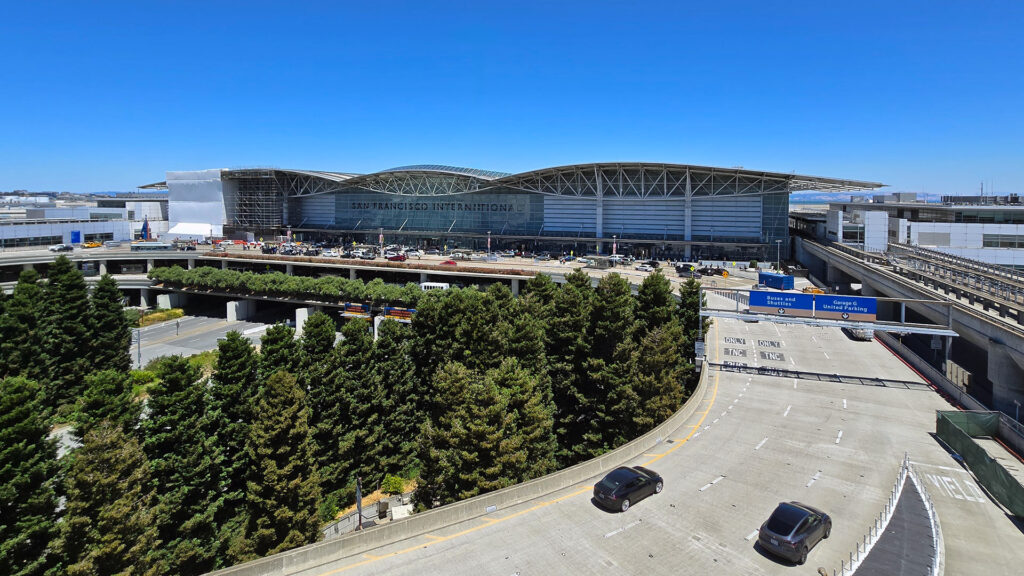
Here’s where Caltrain becomes genuinely essential: seamless connections to both Bay Area airports.
San Francisco (SFO): The Millbrae Transfer
This is one of the best-integrated airport connections in the country. Take Caltrain to Millbrae station. Walk across the platform—literally just walk across—to the BART platform. Board the next BART train to SFO – San Francisco International Airport (they run every 15-20 minutes). Nine minutes later: airport. If you’re heading from SFO to catch Caltrain at Millbrae, head down the BART platform, up the stairs, follow the signs, and then down the stairs to the Caltrain platform.
From Palo Alto: About 30 minutes to Millbrae, then nine minutes to SFO. From San Jose: Roughly an hour to Millbrae, then nine minutes to SFO.
Compare that to driving: Fighting 101 traffic, circling parking structures, paying $40-60 per day for long-term parking, dealing with shuttle buses to your terminal, then reversing all that when you return exhausted from your trip.
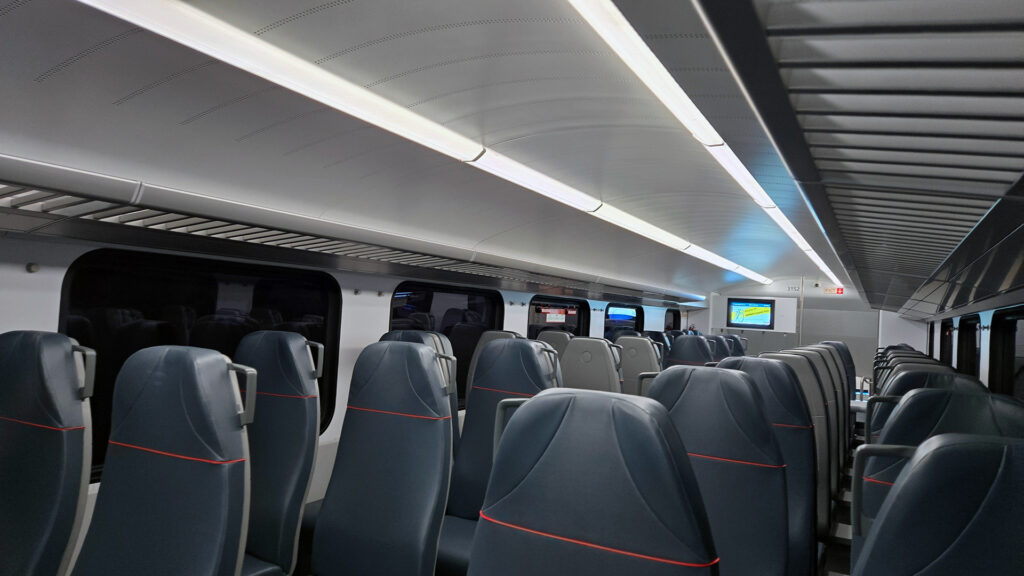
The Caltrain-BART connection eliminates all of it. Board the train reading a book, transfer at Millbrae without stress, and arrive at SFO relaxed and ready. Return from your trip the same way—collect baggage, board BART, transfer to Caltrain, read or sleep the whole way home.
Pro tip: Check Caltrain’s schedule, not BART’s. BART runs frequently enough that you’ll always catch a train to SFO within 15-20 minutes. Caltrain is what you need to plan around.
Cost comparison: Caltrain + BART to SFO runs about $15-20, depending on your origin. One day of airport parking costs $40-60. The math is immediate.
San Jose (SJC): The VTA 60 Route
San Jose Airport is underrated—less crowded than SFO, often cheaper flights, and convenient for Peninsula and South Bay travelers. It’s accessible via Caltrain with a single bus connection.
Take Caltrain to Santa Clara station. Exit the station and find VTA Route 60—it stops right at the Caltrain station. Board the bus heading toward the airport. Fifteen minutes later: SJC terminals.
Route 60 runs frequently—every 15 minutes during peak times, every 30 minutes off-peak. It’s straightforward, well-signed, and used by enough locals that you’ll know you’re on the right bus.
From San Francisco: About 75 minutes total (Caltrain to Santa Clara, then Route 60 to SJC). From Palo Alto or Mountain View: 30-40 minutes to Santa Clara, then 15 minutes to the airport. From San Jose Diridon: Take Caltrain to Santa Clara and transfer to Route 60.
This connection doesn’t get talked about enough. Everyone focuses on SFO access, but SJC via Santa Clara is genuinely easy. I use it regularly because it’s so straightforward—no stress, no traffic anxiety, no parking fees, just simple multi-modal transit that works.
Why This Changes Everything
Airport access via Caltrain isn’t just about saving money, though that’s real. It’s about removing the entire mental burden of “how do I get to the airport” from your travel planning.
You’re not calculating traffic timing. You’re not building in an extra buffer for parking delays. You’re not worrying about long-term parking costs adding up while you’re gone. You’re not driving home exhausted after a cross-country flight.
You’re just taking the train. Reading, working, or sleeping the whole way. Arriving calm instead of stressed. That’s the transportation choice that actually serves you.
The Electrification Difference
Quick sidebar: Caltrain’s recent electrification matters more than you might think. The new electric trains are quieter, smoother, faster, and more frequent than the old diesel locomotives. They accelerate quicker, which means shorter travel times. They’re more pleasant to ride.
But beyond the mechanical improvements, electrification represents a commitment. The Bay Area invested billions in making Caltrain world-class. The system’s ridership keeps growing. Service keeps improving.
This isn’t a transit system on life support. This is a system getting better, which changes the entire calculation of whether to use it.
Making It Work: What I’ve Learned
Clipper Card simplifies everything. Load money on a Clipper Card and use it across Caltrain, BART, Muni, VTA, and most Bay Area transit. No more juggling different payment systems or keeping track of paper tickets.
Bikes extend your range dramatically. Many Caltrain stations aren’t in the middle of downtowns. Having a bike turns “the station is a mile from where I want to go” from a problem into a five-minute ride. The bike infrastructure throughout the Peninsula makes this genuinely practical.
Limited vs. Local matters for longer trips. If you’re going from SF to San Jose during commute hours, taking a Limited train can save 20-30 minutes. Check the schedule and plan accordingly.
Weekend frequency is workable. Hourly service on weekends isn’t as convenient as weekday frequency, but it’s manageable. Plan your day around departure times and you’ll be fine.
The multi-modal approach is essential. Caltrain gets you to the general area. Walking, biking, or local buses get you to specific destinations. Think in terms of systems connecting, not point-to-point service.
What You’re Actually Trading
The limitation: Caltrain only goes north-south along the Peninsula. It doesn’t serve the East Bay, North Bay, or most of San Francisco beyond 4th & King. For those destinations, you need BART, ferries, or other systems.
What you gain: A reliable, frequent, pleasant way to explore seventy-seven miles of Bay Area without ever touching a car. Airport connections that actually work. Access to downtowns, tech campuses, cultural institutions, and neighborhoods throughout the Peninsula.
All while avoiding 101 traffic, 280 congestion, and the constant stress of Bay Area driving.
The trade makes sense if you’re exploring the Peninsula specifically, or if you’re using Caltrain as one piece of a broader Bay Area transit strategy. Combined with BART, Muni, and local systems, you can reach most places worth visiting entirely car-free.
Your Turn
Next time you’re in the Bay Area—or if you live here and default to driving—try Caltrain. Pick a destination along the Peninsula. Check the schedule. Go.
Maybe it’s Stanford on a Saturday morning. Maybe it’s SFO for your next flight. Maybe it’s downtown San Jose just to see what’s actually happening down there. Maybe it’s Redwood City because you’ve never been and you’re curious.
Bring a book. Watch the Peninsula roll past. Notice how the landscape changes—from San Francisco’s urban density through the suburbs to San Jose’s sprawl, with surprisingly intact downtowns scattered throughout.
Arrive without the stress of driving. Explore. Take the train back when you’re done.
See what you discover when you let the train connect you to places instead of fighting traffic to predetermined destinations.
That’s the opportunity Caltrain offers: Not just a way to avoid driving, but a different way of understanding the Peninsula as a connected corridor of communities rather than an endless freeway you endure between San Francisco and San Jose.
Around the corner and around the globe—or in this case, from 4th & King to Diridon Station.